Prosecutors last week dropped charges against a Winona, Minn., teenager who was ticketed in September for desecrating an American flag.
Police had charged the 14-year-old boy after he wrote song lyrics on a flag, burned holes in it, and tore it into several pieces. He then scattered the pieces throughout his high school before skipping class to attend the Rage Against the Machine concert on Sept. 3rd in Minneapolis during the Republican National Convention.
While the U.S. Supreme Court has invalidated prohibitions on desecrating the U.S. flag, Minnesota is one of 47 states with laws on the books prohibiting such acts. Why was this incident allowed to slide? Perhaps city prosecutors had bigger fish to fry, or as legal blogger Sam Lea speculated, maybe they didn't want Minnesota's anti-flag desecration law to be held up to constitutional scrutiny via the courts.
Showing posts with label First Amendment. Show all posts
Showing posts with label First Amendment. Show all posts
Wednesday, October 8, 2008


Monday, June 23, 2008
Carlin was at the center of pivotal First Amendment case
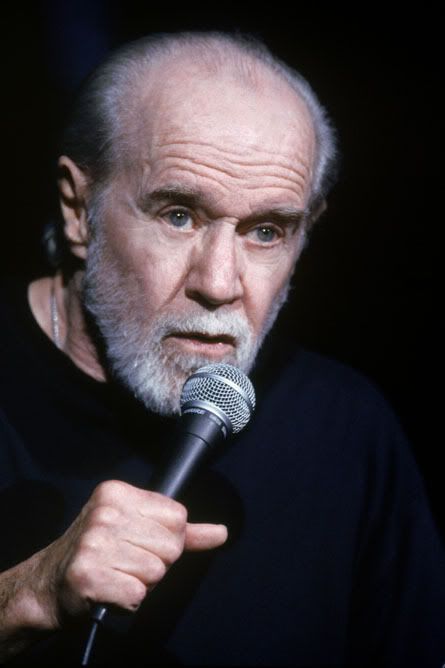
Comedian George Carlin died of a heart attack yesterday at age 71. He’ll be remembered not only as an iconoclastic, irreverent chronicler of the human condition, but also the focal point of an interesting free-speech case.
In 1973, New York radio station WBAI-FM played a notorious recording of Carlin’s in which he dissects (at length) the seven words that can't be said on television. A man driving with his young son heard the routine and complained to the Federal Communications Commission, which fined WBAI.
The station then sued the FCC. The case eventually went to the U.S. Supreme Court, which, in a 5-4 decision, found in favor of the FCC’s sanction. (The case is Federal Communications Commission v. Pacifica Foundation et al.)
Although the court ruled against WBAI, Carlin continued to be a strong proponent of free speech and freedom from government meddling -- and ironically, some of those "bad words" can now be found on television with little effort.
In 1973, New York radio station WBAI-FM played a notorious recording of Carlin’s in which he dissects (at length) the seven words that can't be said on television. A man driving with his young son heard the routine and complained to the Federal Communications Commission, which fined WBAI.
The station then sued the FCC. The case eventually went to the U.S. Supreme Court, which, in a 5-4 decision, found in favor of the FCC’s sanction. (The case is Federal Communications Commission v. Pacifica Foundation et al.)
Although the court ruled against WBAI, Carlin continued to be a strong proponent of free speech and freedom from government meddling -- and ironically, some of those "bad words" can now be found on television with little effort.
The case that Carlin helped spark is a staple of First Amendment curricula at many law schools. In fact, today we were reading about an attorney in Connecticut who teaches a communications law class. He features Pacifica, and then brings the course to a close by choosing a student to stand and recite the seven words to the rest of the class.
Tuesday, March 25, 2008
A celebration of the First Amendment
Anthony Lewis’ new book, “Freedom for the Thought That We Hate,” is a fascinating, concise and thorough survey course of the First Amendment. At fewer than 200 pages of text, it’s not an in-depth look at freedom of speech but more like a celebration of it. And I’m not saying that because he celebrates the rights of reporters: he argues that the press is “not always the good guy” and judges should apply a balancing test to the question of a reporter’s right to protect anonymous sources.
Also interesting is Lewis’ take on Republican Party v. White which, as all sentient Minnesota lawyers know, is based on the First Amendment rights of judges and judicial candidates. He says: “The Minnesota decision seems to me an egregious misapplication of the First Amendment, treating it woodenly and ignoring the reality involved. The test of judicial decisions is not, as Justice [Oliver Wendell] Holmes said of political speech, ‘the power of the thought to get itself accepted in the competition of the market.’ Some of the greatest judicial opinions have run against popular opinion—as did those of Holmes and [Justice Louis] Brandeis when they dissented from the punishment of radical speech. If judges announce their views in election campaigns, in effect telling the voters that they will decide this way or that, they appear to be just another species of politician. The commitment of judges should be to the law, to interpreting it as faithfully as they can, and not to current popular opinion.”
Lewis goes on to note that when a court narrowly decides a case, as it did White, there is always hope to those disappointed by it that a later court will overrule it. But he also notes that since the “ascendancy” of the First Amendment in New York Times v. Sullivan, the court has not changed its mind about the central importance of freedom of speech or of the press.
Also interesting is Lewis’ take on Republican Party v. White which, as all sentient Minnesota lawyers know, is based on the First Amendment rights of judges and judicial candidates. He says: “The Minnesota decision seems to me an egregious misapplication of the First Amendment, treating it woodenly and ignoring the reality involved. The test of judicial decisions is not, as Justice [Oliver Wendell] Holmes said of political speech, ‘the power of the thought to get itself accepted in the competition of the market.’ Some of the greatest judicial opinions have run against popular opinion—as did those of Holmes and [Justice Louis] Brandeis when they dissented from the punishment of radical speech. If judges announce their views in election campaigns, in effect telling the voters that they will decide this way or that, they appear to be just another species of politician. The commitment of judges should be to the law, to interpreting it as faithfully as they can, and not to current popular opinion.”
Lewis goes on to note that when a court narrowly decides a case, as it did White, there is always hope to those disappointed by it that a later court will overrule it. But he also notes that since the “ascendancy” of the First Amendment in New York Times v. Sullivan, the court has not changed its mind about the central importance of freedom of speech or of the press.
Monday, March 24, 2008
News conference at federal courthouse at noon
The Minnesota chapter of the ACLU, the National Lawyers Guild and members of the Coalition to March on the RNC are having a news conference at noon at the federal courthouse in Minneapolis. The purpose of the conference is to discuss the ongoing efforts to get permits for planned demonstrations when the GOP national convention is held in St. Paul this September.
Thursday, April 12, 2007
From the classroom to the courtroom
There is an interesting piece in the Pioneer Press about a lawsuit over religion in public schools. It seems like these religious suits have really proliferated in recent years. I wonder if that means as a society we are getting more religious or less. Perhaps it just means that we are getting more litigious. In any event, here is a snippet of the article for your perusal:
St. Paul schools in fight over free speech
By Shannon Prather
Pioneer Press/ April 11, 2007
Boys Scouts troops and Little League teams try to boost their ranks by handing out fliers in St. Paul public schools. Church youth groups want in on the action.
The Greater St. Paul Area Evangelicals sued St. Paul Public Schools this week, contending a district rule barring religious fliers violates First Amendment free speech rights.
The district acknowledges it bans materials of a sectarian nature. But administrators' main concern is the church group's flier asks parents to take their children out of class each week, a school district attorney said.
The lawsuit is among the latest controversies over free speech in public schools.
Click here for more.
Subscribe to:
Posts (Atom)